How to choose a kart engine for your child
17 October 2026 · Gear Racing
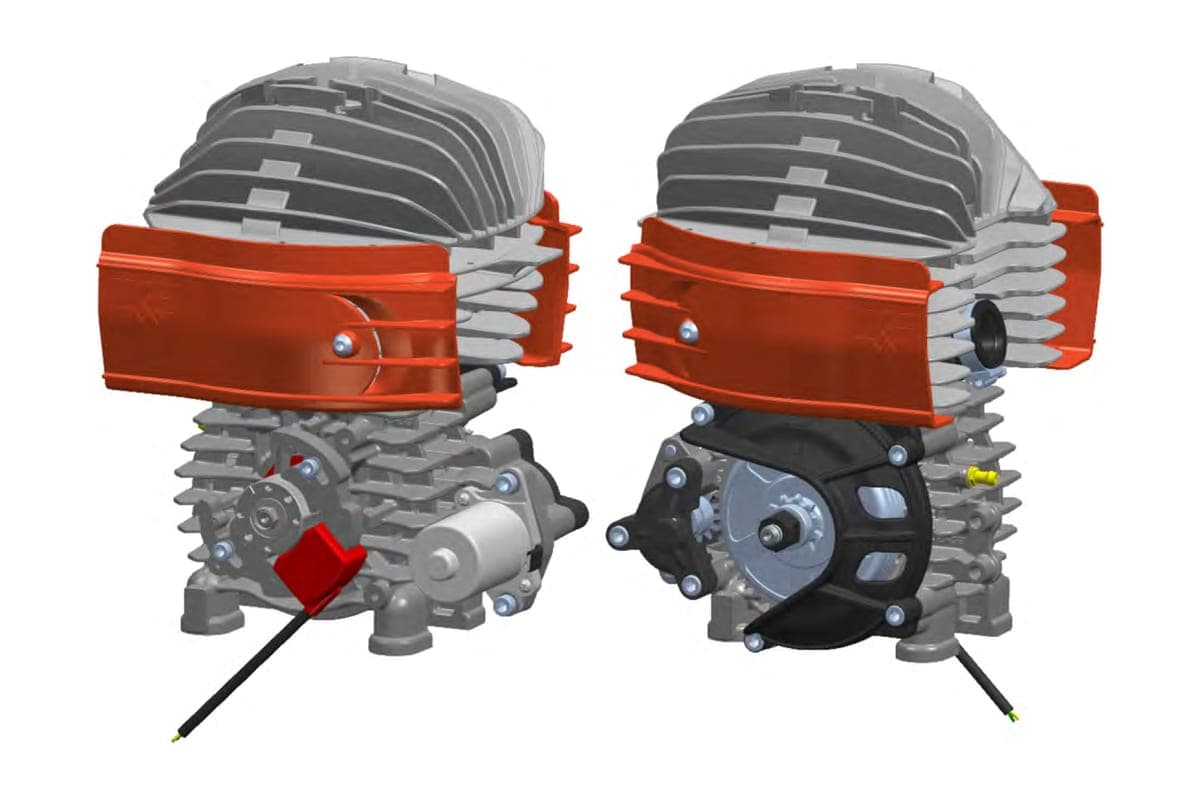
This article helps you pick the right engine for your child by starting from the class rules instead of power figures. A kart engine for kids is defined by the class your child will drive in: each karting class permits specific engines, so the class decision comes first. Getting that order right saves money, because an engine bought for the wrong class can rarely be used in competition.
Start from the class
Karting classes are divided by age, and each class permits specific engines. That means you cannot sensibly compare engines until you know which class your child will enter. In Estonia and Finland the typical path runs from Micro and Mini classes for younger children up to junior classes around ages 12 to 14, and then onward to senior categories.
If your child wants to race officially, the engine must be homologated for the class. A non-homologated engine limits the child to training and hobby driving, and it is also harder to sell on later. You can read the international class regulations on the FIA Karting website, and the national federation applies them locally.
A common belief among parents is that more power makes the child faster. In practice a young driver improves fastest on a restricted class engine, and excess power often slows lap times because the child spends energy managing the kart instead of learning racing lines.
Engines by age group
Once the class is clear, the engine choice narrows down quickly. LKE manufactures karting engines used in mini and junior classes, and Lenzokart builds matching chassis for different age groups, so the engine and the kart can be specified together.
Mini and micro classes
Mini class engines are small two-stroke units with restricted power, so performance stays controlled for young drivers. For this age group we supply the REV1 MINI. The engine must match the chassis size: a cadet or mini chassis differs from a full-size chassis in wheelbase and weight, so a mini engine on a mini chassis is the correct combination, not a compromise.
Junior and senior classes
Around ages 12 to 14 drivers move into junior categories. Depending on the class your child enters, the options in our range are:
- OKJ for the junior OK category
- OKN and OKN-J for the OK-N classes
- REV1 KZ for the KZ2 gearbox class later on
Check with your club or federation which of these classes runs actively in your region before deciding.
New or used engine
A used engine can be a sensible first purchase, but only if its rebuild history is known. Two-stroke race engines are rebuilt at regular intervals, and a well-documented used engine with recent service can offer good value. An unknown-history engine, on the other hand, can cost more in repairs than the price difference to a new one.
Before buying a used engine, ask the seller for:
- written or logged rebuild records
- hours run since the last rebuild
- who carried out the service work
- confirmation that the homologation matches your child's class
- the reason the engine is being sold
If the seller cannot answer these questions, treat the engine as needing a full rebuild and price it accordingly. With a new engine from an importer you start with a known baseline, a clear spare parts supply and no guesswork about past treatment, which matters when the driver is a beginner.
What ownership really costs
The engine price is only part of the picture. A complete running setup also needs a carburettor, an exhaust, mounting parts, fuel mix and regular service, and all of these add up over a season. When you compare offers, compare the complete configuration rather than the bare engine price, because a low engine price with missing parts is not cheaper in the end.
Another misconception worth clearing up: a kart engine does not work like a moped engine that runs for years without attention. Two-stroke kart engines need regular rebuilds, and piston and bearing maintenance is a normal part of running costs, not a sign of a defect. Plan the season budget with service included from the start. Parents who skip this step are often surprised mid-season, while those who budget for rebuilds can plan race weekends calmly and keep the engine reliable throughout the year.
Asking for a quote
Gear Racing is the official importer of LKE engines and Lenzokart chassis in Estonia and Finland. There is no online checkout: you send an enquiry describing your child's age and class, and you get an answer with availability and delivery time. Every engine page shows the price including VAT, with the net price below it.
In your enquiry, mention the class your child will drive in, whether you already have a chassis and what size it is, and whether the engine is for competition or training. With that information we can quote a complete, class-legal configuration instead of a bare engine. Smaller parts ship to parcel lockers in Estonia and Finland, and larger shipments go with DHL or FedEx, so spare parts during the season are straightforward to order as well.
If you are weighing up a first engine for your child, send us a short message through the contact and enquiries page and we will help you match the engine to the class.