How much does it cost to start karting
23 October 2026 · Gear Racing
This article gives you a realistic picture of karting costs, from a single rental session to owning your own kart and running it for a full season. Whether you are an adult curious about the sport or a parent of a child aged roughly 6 to 15, the goal is the same: to help you pick an entry level that matches your budget and to flag the expenses that beginners most often overlook.
Trying karting with rental sessions
If you have never driven a kart, start at a rental track. A single session at an indoor or outdoor circuit costs tens of euros and you need no equipment of your own, because the track provides the kart, the helmet and usually overalls. Rental karting is the cheapest way to find out whether you or your child actually enjoys the sport before any larger sum is spent.
A common misconception is that you must buy a kart to start. You do not. Many clubs offer arrive-and-drive options where you pay per session and drive a club kart. If interest holds over several months of regular rental driving, that is a good sign that investing in your own equipment makes sense. If the enthusiasm fades after a few visits, you have spent a modest amount and learned something useful. Rental sessions also stay useful later as extra seat time between practice days on your own kart.
Buying your first kart
Once you decide to own a kart, the purchase splits into two parts: the chassis and the engine. The engine class determines a large share of your budget, because children's classes use smaller engines with lower running costs than senior two-stroke classes. You can read how the international classes are structured on the FIA Karting website, and our earlier article on how to choose a kart engine for your child covers the decision in more detail.
New kart packages
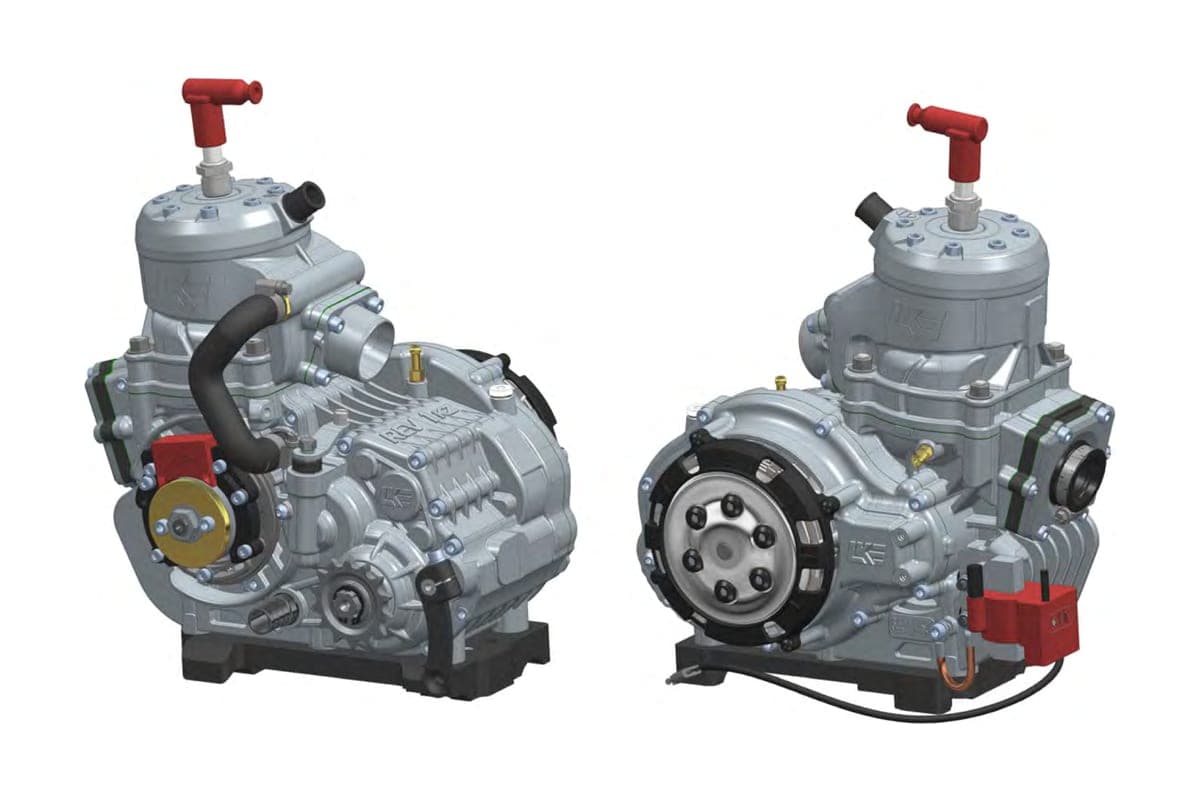
A new competitive chassis and engine package typically costs several thousand euros plus VAT. The exact price depends on the class, so confirm it with the importer before planning your season. We sell LKE engines for several classes, including the REV1 MINI for younger drivers, and answer every enquiry with a price and delivery time.
Used karts and their risks
A used chassis with an engine can be significantly cheaper than a new package, but condition varies a lot. A worn chassis or a tired engine can erase the savings through repairs, so take an experienced mechanic with you when you inspect a used kart, and ask when the engine was last rebuilt and how many hours it has run since.
Safety gear you need
Personal safety equipment is mandatory and should never be where you cut corners. Plan for this gear from the start:
- a homologated karting helmet
- a karting suit
- gloves
- karting boots
- a rib protector, which is especially important for younger drivers
This gear alone can cost from several hundred euros upwards, and prices rise with size options, homologation level and brand. The helmet deserves the largest share of that money, because it protects the one part of the driver that cannot be repaired. For children, remember that they grow: a suit bought with a little room lasts longer, but a helmet must fit properly right now, so budget for replacements as the driver grows. If you are starting with rental sessions only, you can postpone most of this list, since tracks provide the basics. The moment you move to your own kart and regular practice, the full set becomes necessary.
Running costs through the season
Many beginners assume the purchase price of the kart is the main expense. In practice, over a full season the running costs can exceed what you paid for the kart. The main recurring items are:
- tyres, which hobby drivers can run for many sessions while competitive drivers may need a fresh set for every race weekend
- fuel and oil
- spare parts and crash damage
- track fees for practice days
- periodic engine rebuilds, with an interval that depends on the engine type and how hard it is used
Transport is another cost that surprises people. A kart does not drive on public roads, so you need a trailer, a van or at minimum a large car with a kart trolley. If you want to race rather than just practise, add licence fees, entry fees and club membership on top. Hobby track driving without competing is noticeably cheaper than a race calendar.
A realistic first season budget
How much you spend depends mostly on three choices: rental or ownership, hobby driving or racing, and the engine class. A season of regular rental sessions is the smallest budget. Owning a kart and practising without competing sits in the middle. A full race season with fresh tyres, entry fees and travel is the largest commitment, and in senior two-stroke classes the running costs climb accordingly.
Another misconception worth correcting is that karting costs as much as car racing. A hobby karting season can be run for a fraction of any car racing budget, especially in children's and hobby classes. The sensible path for most beginners is to start with rental sessions, move to a well-checked used or new kart in a class that fits the driver's age and build up from there. That way each step is a conscious decision rather than a surprise on the bank statement.
If you want a concrete price and delivery time for an engine or a chassis package, send us a message through our contact and enquiries page and we will reply with the numbers for your class.