How to read LKE spare part codes and order the right part
29 October 2026 · Gear Racing
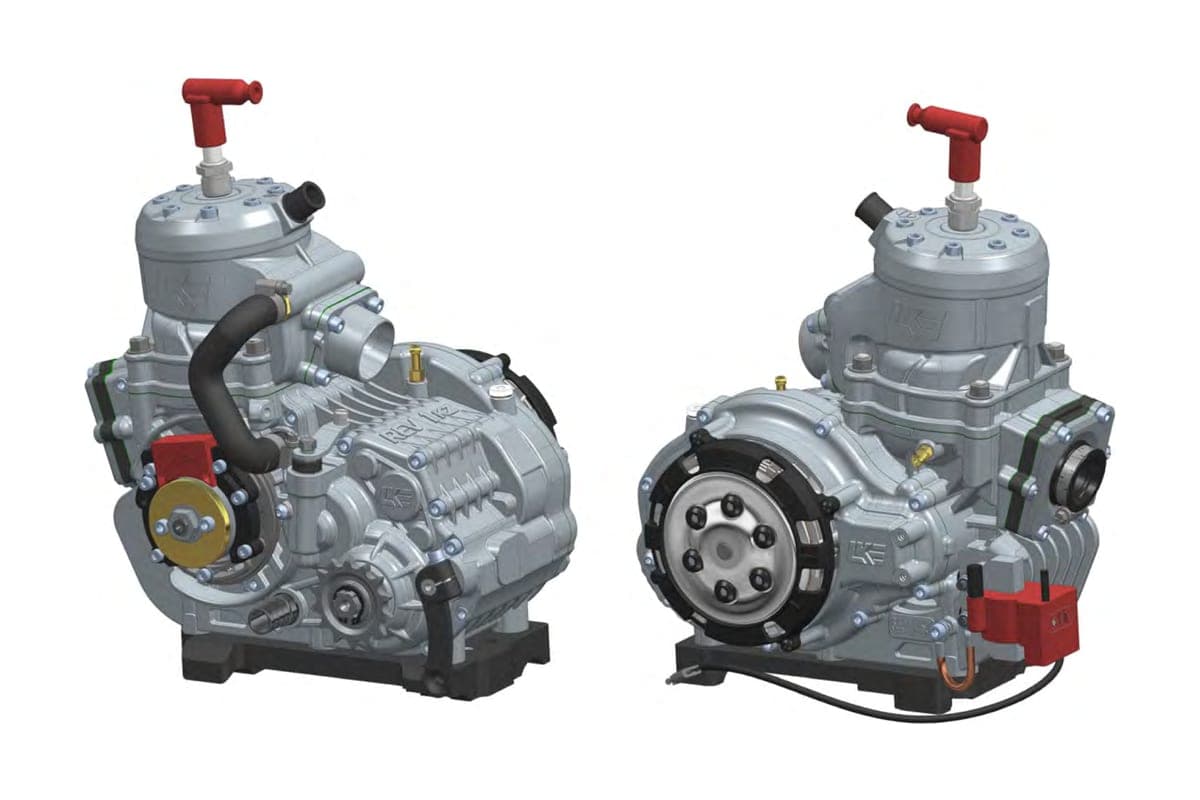
This guide shows you how to find the correct part code for an LKE engine and what to put in your enquiry so the right part arrives the first time. Many LKE spare parts look similar to each other, but dimensions and tolerances can differ between models and production periods, so quoting a code is more reliable than describing the part in words. Gear OÜ supplies LKE spare parts from Estonia and worldwide through lenzokart.ee on an enquiry basis, and a clear enquiry gets you a faster and more accurate price offer.
How LKE part catalogues work
LKE is an Italian engine manufacturer, and its parts documentation follows a layout that is common for kart engines. The parts are organised in exploded view diagrams, and each diagram covers one assembly of the engine. Typical assembly groups include:
- cylinder and cylinder head
- crankcase and crankshaft
- clutch
- ignition
In each diagram, a reference number sits next to every part. That reference number is not the part code itself. It points to a row in the accompanying table, and the table gives the actual code you order with. The same part can appear in several engine models, but fitment can differ between model generations, so the code alone does not always tell the whole story. You can find general information about the engine range on the manufacturer site at lkengines.com, while parts for Estonia and Finland come through Gear OÜ.
Find your engine model first
Before you open any diagram, confirm which engine you actually have. The LKE range sold here covers the REV1 MINI, OKJ, OKN, OKN-J and REV1 KZ, and the differences between some of those models are easy to miss from the outside. If you are unsure which class your engine belongs to, the article on the difference between OKJ, OKN and OKN-J is a good starting point.
Where the serial number sits
The engine serial number is stamped on the crankcase. This number matters because it lets the importer identify the exact model and production period of your engine. A common assumption is that the newest version of a part always fits older engines. In practice, revisions can change fitment, and two engines of the same model from different production periods may take different variants of the same part. Quoting the serial number removes that guesswork and protects you from ordering a part that bolts on poorly or not at all.
From diagram to orderable code
Once you know your engine model, the process is straightforward. Find the diagram for the assembly you are working on, locate the part in the drawing, note the reference number next to it, and then look up that reference number in the table to get the part code. Write the code down exactly as it appears, because many codes differ by only one character and a small typing error can point to a completely different part. Consumable parts such as gaskets, piston rings, bearings and clutch components are the most commonly ordered items, and they are often replaced in sets rather than one piece at a time. If you are opening the engine anyway, it usually makes sense to list the full set of consumables for that assembly in one enquiry instead of ordering them one by one as work progresses.
Homologation-sensitive parts
Some parts are homologation-sensitive in competition classes. That means the replacement must match the homologated specification for your engine to remain legal in racing. If you race under national or international rules, mention your class in the enquiry so the correct homologated variant can be confirmed before the part ships.
What to include in your enquiry
There is no online checkout at lenzokart.ee. You send an enquiry and receive an answer with price and delivery time, with prices quoted plus VAT. The quality of the answer depends on the quality of the enquiry, so include the following:
- the part code from the table, written exactly as printed
- the quantity you need
- your engine model, for example OKN or REV1 KZ
- the engine serial number from the crankcase
- your racing class, if the part is homologation-sensitive
A part code alone is not always enough. For some assemblies the importer also needs the engine model or production year to confirm the correct variant, which is exactly why the serial number belongs in every enquiry. Sending all of this in the first message can save a round of follow-up questions and shortens the time between your enquiry and the part arriving at your workshop. You can browse the engine range under LKE engines if you need to confirm your model name.
When the code is unreadable
Worn or damaged parts do not always show a readable code, and sometimes the part you need is not obvious in the diagram. In that case, take a clear photo of the part together with the engine serial number and attach both to your enquiry. This combination usually allows the importer to identify the part even without a code. What you should not do is substitute a part from another engine brand because it looks identical. Dimensions and tolerances can differ even when two parts appear the same, and a near match can cause damage that costs far more than the correct part would have. The same caution applies to used parts bought without documentation, because without a code or serial number there is no reliable way to confirm which engine generation they came from.
If you have a part code ready, or a photo and a serial number, send them through the contact and enquiries page and you will get a price offer with delivery time.